


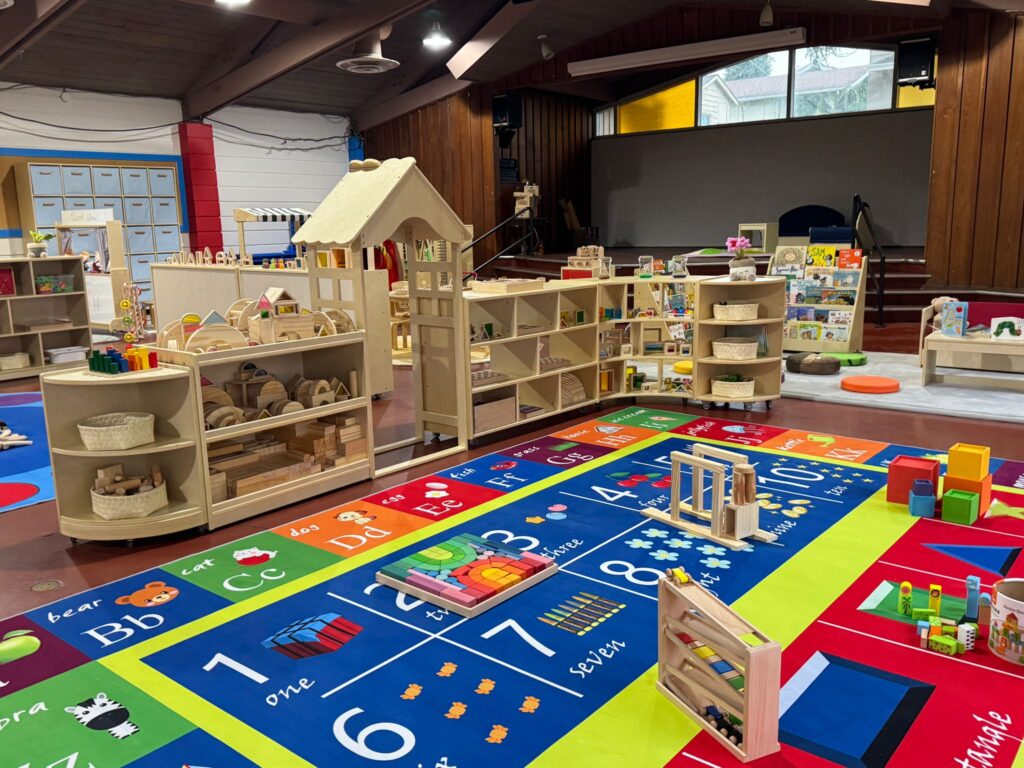
Quality childcare providers in West Vancouver should combine BC licensing, qualified early childhood educators, warm daily interactions, safe routines, outdoor play, and clear parent communication.
- Look for a licensed child care facility, because licensing connects the program to BC health, safety, staffing, and inspection requirements.
- Ask about educator credentials, since trained Early Childhood Educators understand development from infancy through age 5.
- Watch how educators speak with children, because calm guidance often reveals more than a polished room.
- Review routines for meals, naps, toileting, handwashing, and outdoor time, which also show how the center supports predictability.
- Choose a provider that communicates daily with families, since parent partnership helps children adjust faster.
- Notice whether children seem safe, engaged, and respected, because quality care supports emotional security as much as early learning.
Parents often compare tuition, hours, and availability first, although the best decision usually comes from watching what happens during ordinary moments. A 20 minute tour can reveal educator patience, child confidence, room safety, peer relationships, and the rhythm of the day, provided that families know what to observe and which questions to ask.
Start with BC licensing and staff qualifications
A licensed childcare provider follows BC Child Care Licensing Regulation standards, which cover health, safety, staffing, records, nutrition practices, and facility requirements. Although licensing does not make every program identical, it gives parents a baseline for accountability.
In British Columbia, group child care for children under 36 months generally allows a maximum group size of 12, and staffing must increase as more children enroll. For infant and toddler programs, families should expect close supervision because very young children need help with feeding, sleep, movement, language, and emotional regulation throughout the day.
Ask whether the program employs certified Early Childhood Educators, often called ECEs, and whether infant toddler staff hold additional training. Since children under age 5 learn through relationships, educator preparation matters as much as toys or classroom design.
| What to verify | What it shows | What to ask |
|---|---|---|
| BC child care license | The center meets required operating standards | May I see the current license and inspection history? |
| ECE certification | Educators have formal early childhood training | How many staff members hold ECE or infant toddler certification? |
| Staff to child coverage | Children receive appropriate supervision | How do you cover breaks, illness, and busy transition times? |
| First aid training | Staff can respond to injuries or emergencies | Who on site holds valid first aid certification each day? |
Stars for Life Childcare offers a useful local example because its approach centers on nurturing care, age appropriate learning, and consistent family communication. Parents can review program details directly through Stars for Life Childcare while comparing local options.
Warm educator interactions reveal daily quality
Children thrive when educators respond quickly, calmly, and respectfully. During a tour, watch whether adults kneel to child eye level, use children by name, and explain limits in simple language.
A beautiful classroom can still feel stressful if educators rush, ignore distress, or rely on constant correction. However, a modest room can support excellent development when adults listen closely and guide children with patience.
Look for these signs during ordinary moments:
- Educators comfort upset children promptly, because emotional safety helps children return to play and learning.
- Staff use clear phrases such as walking feet or gentle hands, which also helps children understand expectations.
- Children approach adults freely, since trust often shows through small gestures.
- Educators support conflict without shame, although they still set firm boundaries.
- Adults notice quiet children as well as energetic children, which reduces the chance that reserved children fade into the background.
Quality providers also avoid forcing every child into the same social style. Some children need 2 weeks to settle into a new routine, while others participate actively on the first day. A good educator adapts support without labeling the child.
Safety routines should feel visible and practiced
A safe childcare environment uses daily systems, not occasional reminders. Parents should see secure entrances, clean handwashing areas, covered outlets, age appropriate furniture, labeled medication storage, and clear sign in procedures.
BC licensed childcare programs must follow health and safety rules, although parents should still ask how the rules work in real life. For example, a provider may have an emergency plan on paper, but strong centers also practice fire drills, maintain attendance records, and train staff on pickup authorization.
Tour details that often reveal safety culture
- Check whether the entrance requires staff approval before visitors enter.
- Look for posted emergency contacts and evacuation procedures, because quick access helps staff act fast.
- Notice whether toys fit the age group, since small parts create choking risks for toddlers.
- Ask how often outdoor equipment gets inspected, especially after heavy rain or strong wind.
- Watch meal supervision, because choking prevention depends on seating, pacing, and staff attention.
A strong provider welcomes safety questions because clear answers build trust. If staff seem annoyed by basic questions about allergies, injury reporting, sunscreen, sleep checks, or cleaning routines, parents should treat that reaction as meaningful information.
Predictable routines help children feel secure
Consistent daily routines reduce anxiety because children can anticipate what happens next. A quality childcare day usually balances arrival, free play, meals, outdoor time, rest, small group activities, and flexible transitions.
For preschool age children, many programs use visual schedules with 6 to 10 pictures so children can follow the day before they read. This simple tool helps children build independence, especially during transitions from home to care.
Ask how the center handles common pressure points such as drop off tears, toileting accidents, nap resistance, and picky eating. Since every child hits rough patches, the best answer describes practical support rather than perfect behavior.
| Routine area | Quality sign | Concern to watch |
|---|---|---|
| Drop off | Staff greet each child by name and support separation | Children wander in without adult connection |
| Meals | Children eat seated with supervision and calm pacing | Staff rush meals or use food as a reward |
| Rest | Children follow safe sleep or quiet rest routines | Families receive vague answers about supervision |
| Transitions | Educators use songs, warnings, or visual cues | Adults rely on repeated shouting |
Outdoor play supports health, confidence, and learning
High quality childcare includes daily outdoor play whenever conditions allow, because movement supports balance, coordination, mood, and sleep. In many early learning programs, children spend 1 to 2 hours outside across the day, adjusted for weather and age.
West Vancouver families should ask how providers handle rain, cold, sun, and air quality. Since coastal weather changes quickly, strong programs plan for waterproof clothing, shade, sunscreen routines, and indoor gross motor options when outdoor conditions become unsafe.
Outdoor play should include more than running in circles. Children gain confidence when they climb, dig, carry, build, collect leaves, observe insects, and practice social problem solving in open space.
- Natural materials invite creativity, because a stick can become a tool, a bridge, or a pretend microphone.
- Risk aware play helps children judge height, speed, and distance while adults supervise closely.
- Group games build cooperation, although educators should not force every child into competitive play.
- Quiet outdoor corners support children who need sensory breaks during a busy day.
Communication with parents should be regular and specific
Strong childcare providers communicate with families before problems grow. Parents should expect clear enrollment information, daily updates for younger children, incident reports when needed, and respectful conversations about development.
A generic update such as your child had a good day gives limited value, although it may feel reassuring at first. A more useful update names a specific moment, such as your child spent 15 minutes building a block tower with 2 peers and asked for help when it fell.
Ask how the center communicates routine information. Some providers use apps, while others use written sheets, hallway conversations, email, or scheduled meetings. The format matters less than consistency, privacy, and detail.
Questions that show how partnership works
- How do you share meal, nap, toileting, and mood updates for younger children?
- How do educators raise concerns about speech, behavior, social skills, or separation anxiety?
- How can parents share home changes, such as a new sibling, relocation, or family stress?
- How often do families receive developmental observations or learning summaries?
- How do you support cultural routines, languages, and family values within the program?
Quality communication feels two way because parents know the child outside the center, while educators see the child in a peer group. Better decisions happen when both perspectives guide support.
Social and emotional development belongs at the center of care
Quality childcare teaches children how to name feelings, solve problems, and build friendships. These skills shape readiness for kindergarten because children learn better when they can ask for help, wait briefly, recover from frustration, and join group activity.
Families sometimes focus on early academics, although worksheets and letter drills do not prove quality by themselves. A 4 year old who can recognize letters still needs practice sharing space, listening to stories, managing disappointment, and caring for personal belongings.
Ask educators how they handle biting, hitting, exclusion, big feelings, and peer conflict. A strong answer avoids shame and punishment as the only tools. Instead, the educator describes prevention, close supervision, simple language, redirection, and skill building.
Healthy emotional support in action
- Educators name feelings clearly, because children need words before they can use self control.
- Staff stay near children during conflict, although they allow children to practice problem solving when safe.
- Teachers model repair, which helps children learn to check on a peer and try again.
- Classrooms include cozy areas, books about feelings, and predictable calm down routines.
Stars for Life Childcare reflects this balanced view of early childhood because nurturing relationships, play, routines, and enrichment all contribute to growth. Families benefit when a center treats emotional confidence as a daily learning goal.
What to observe during a childcare tour
A childcare tour should show the real daily environment, not only the best looking classroom corner. Parents should arrive with questions, but they should also watch how the room feels during active care.
Plan to spend at least 20 to 30 minutes on site if the provider allows it. During that time, observe sound level, educator tone, child engagement, cleanliness, supervision, and transitions. If children seem curious, connected, and comfortable, the environment likely supports healthy development.
| Observation | Positive sign | Possible red flag |
|---|---|---|
| Educator tone | Calm, clear, and respectful | Frequent yelling or sarcasm |
| Child behavior | Children explore, ask questions, and seek help | Children appear fearful or ignored |
| Room setup | Materials sit at child height and match ages | Clutter blocks movement or supervision |
| Outdoor area | Children have space for active and quiet play | Equipment looks damaged or poorly supervised |
| Staff response | Adults answer questions directly | Answers feel vague or defensive |
Trust your observations, although a single imperfect moment should not decide everything. Children cry, spills happen, and transitions can feel noisy. The key question is whether educators respond with skill, warmth, and control.
Questions to ask before enrolling
The best enrollment questions connect policy to daily practice. A provider may have strong written policies, but parents need to know how staff apply them with real children.
- What is your staff turnover rate over the past 12 months?
- How do you help new children settle during the first 2 weeks?
- What does a typical day look like for this age group?
- How many children and educators are usually present during peak hours?
- How do you handle illness, fever, medication, allergies, and injury reports?
- How much outdoor time do children receive each day?
- How do you support children who need extra help with language, behavior, or sensory needs?
- What meals or snacks do you provide, and how do you manage food restrictions?
- How do you communicate with parents after a difficult day?
- What fees, closures, deposits, notice periods, and waitlist procedures should families understand?
Ask for concrete examples because examples reveal practice. If a provider explains how staff supported a child through separation anxiety over 10 drop offs, you gain a clearer picture than you would from a general promise of caring support.
Red flags that deserve a second look
Parents should pause when a provider cannot explain supervision, staffing, discipline, or safety procedures clearly. Availability can feel urgent, especially with long waitlists across BC, but rushed enrollment can create stress later.
Watch for repeated signs such as high staff turnover, unclear licensing information, poor hygiene, unsafe sleep answers, disorganized pickup procedures, and dismissive communication. Although every center faces busy days, quality providers maintain core safety and respect even under pressure.
- Staff avoid questions about licensing or inspections.
- Children receive little comfort during distress, even when multiple educators are nearby.
- Adults use threats, humiliation, or fear to control behavior.
- Rooms feel unsafe because hazards sit within child reach.
- Parent communication happens only after serious problems occur.
- Policies change often, and families receive little notice.
Families should also notice their own comfort level after the visit. If the provider meets technical requirements but the relationship feels tense or dismissive, another program may fit the family better.
How to compare providers fairly
A fair childcare comparison weighs licensing, relationships, routines, communication, safety, outdoor play, and emotional support together. No single feature should dominate the decision unless it directly affects child safety.
Create a simple scorecard with 5 categories and rate each provider from 1 to 5 after every tour. Since memory fades quickly, take notes within an hour of leaving the center.
| Category | Suggested weight | Reason |
|---|---|---|
| Safety and licensing | 30 percent | Children need secure, compliant care first |
| Educator warmth and skill | 25 percent | Relationships drive early learning and trust |
| Communication with parents | 15 percent | Families need clear daily partnership |
| Routines and learning environment | 15 percent | Predictability supports behavior and confidence |
| Outdoor play and enrichment | 15 percent | Children need movement, creativity, and discovery |
This method helps families compare a smaller home based program with a larger group center, although each option may offer different strengths. The right provider gives children safety, connection, and room to grow, while parents receive honest communication and practical support.
Frequently asked questions about choosing quality childcare
Parents should check the BC child care license first because licensing connects the provider to required health, safety, staffing, and inspection standards.
Watch whether educators speak calmly, use child names, comfort distress quickly, and guide behavior without shame or fear.
A useful tour often takes 20 to 30 minutes because parents need time to observe interactions, routines, safety, and room flow.
No. Early academics can help, but quality childcare also builds emotional security, social skills, language, movement, independence, and confidence.
Ask how staff share daily updates, developmental concerns, incident reports, family changes, and difficult day information.
Parents should watch for unclear licensing answers, poor supervision, unsafe rooms, harsh discipline, high staff turnover, and dismissive communication.